
What actually happens from the moment you leave Dhaka to the moment you complete Umrah — the rites in order, where first-timers get confused, and how to make it easier on your body.
Umrah is not complicated, but the first time you do it, the scale of the Haram and the density of the crowd can make simple instructions hard to follow. This is a plain walkthrough of the journey from Dhaka, written for people performing Umrah for the first time. Your group leader will guide you on the ground; the point of reading this beforehand is so that nothing comes as a surprise.
Before you leave Dhaka
Settle your affairs, seek forgiveness from those around you and clear any outstanding debts where you can. Practically: complete your meningitis vaccination at least ten days before departure, confirm your visa and hotel vouchers, and learn the talbiyah by heart. Trim your nails and remove unwanted hair before you travel, because you cannot do so once in ihram.
Entering the state of ihram
Ihram is a state, not just clothing. You must enter it before crossing the miqat, the boundary point. Flying from Dhaka to Jeddah, the miqat is Qarn al-Manazil or Yalamlam depending on your route, and the captain usually announces when the aircraft is approaching it. Most pilgrims change into ihram at Dhaka airport or on board shortly before the announcement — changing at the airport is far easier than in an aircraft toilet.
Perform ghusl or wudu, put on the two unstitched white cloths (men) or your ordinary modest clothing (women), pray two rak'ahs where possible, and make your intention for Umrah. Then begin the talbiyah and continue reciting it frequently until you begin tawaf.
From this point, the restrictions apply: no perfume, no cutting hair or nails, no stitched clothing for men, no covering of the face for women, no marital relations, no argument or harm to any living thing.
Arriving in Makkah
From Jeddah, the transfer to Makkah takes around an hour and a half. Most groups go directly to the hotel, drop bags and proceed to the Haram. If you are able, perform Umrah on arrival — the sooner you complete it, the sooner you can exit ihram and rest properly.
Tawaf — seven circuits of the Kaaba
Enter the Masjid al-Haram with your right foot and the appropriate supplication. When you see the Kaaba, pause and make du'a. Then proceed to the corner of the Black Stone, the starting point for every circuit.
Face or point towards the Black Stone, say Bismillah, Allahu Akbar, and begin. Circle the Kaaba anticlockwise, keeping it on your left, seven times. Each circuit begins and ends at the Black Stone corner. Men may perform idtiba — leaving the right shoulder uncovered — and raml, a brisk walk in the first three circuits, if the crowd permits. Do not fight through the crowd to kiss the Black Stone; pointing towards it from a distance is entirely sufficient and far safer.
After the seventh circuit, cover both shoulders, and if you can reach it, pray two rak'ahs behind Maqam Ibrahim. If it is crowded, pray anywhere in the mosque. Then drink Zamzam water.
Sa'i — between Safa and Marwah
Proceed to Safa and recite the verse about Safa and Marwah being among the symbols of Allah. Face the Kaaba, make du'a, and walk to Marwah. That is one lap. Walking back to Safa is the second. Complete seven laps, ending at Marwah. Men walk briskly between the two green markers; women walk normally throughout. The total distance is roughly three and a half kilometres, so pace yourself — wheelchairs and electric carts are available, and there is no shame in using them.
Halq or taqsir — completing the Umrah
Men shave the head completely (halq) or trim the hair evenly (taqsir); shaving carries greater reward. Women trim a fingertip's length from the end of their hair. Once this is done, your Umrah is complete and the restrictions of ihram are lifted.
Practical advice that makes a real difference
Choose your timing: the hours after Fajr and late at night after Isha are dramatically less crowded than the period around Maghrib. Keep a bottle of water with you and drink far more than you feel you need — dehydration, not fatigue, is what sends most pilgrims to the clinic. Agree a meeting point with your group before you enter, because phone signal inside the Haram is unreliable and gates all look alike. Note your gate number when you enter. Finally, be patient with the crowd. Everyone around you has travelled a long way for the same reason you have.
Keep reading
 Hajj & Umrah
Umrah packing checklist for pilgrims travelling from Bangladesh
A practical, tested packing list for Umrah — what genuinely matters in Makkah and Madinah, what you can buy there for less, and what airlines will not let you carry.
Read article Visa & Documents
The Bangladeshi e-passport: renewal, delivery and travel timing
Your passport is the foundation of every visa application. Here is how e-passport renewal works in Bangladesh, how long it really takes, and the validity rules that catch travellers out.
Read article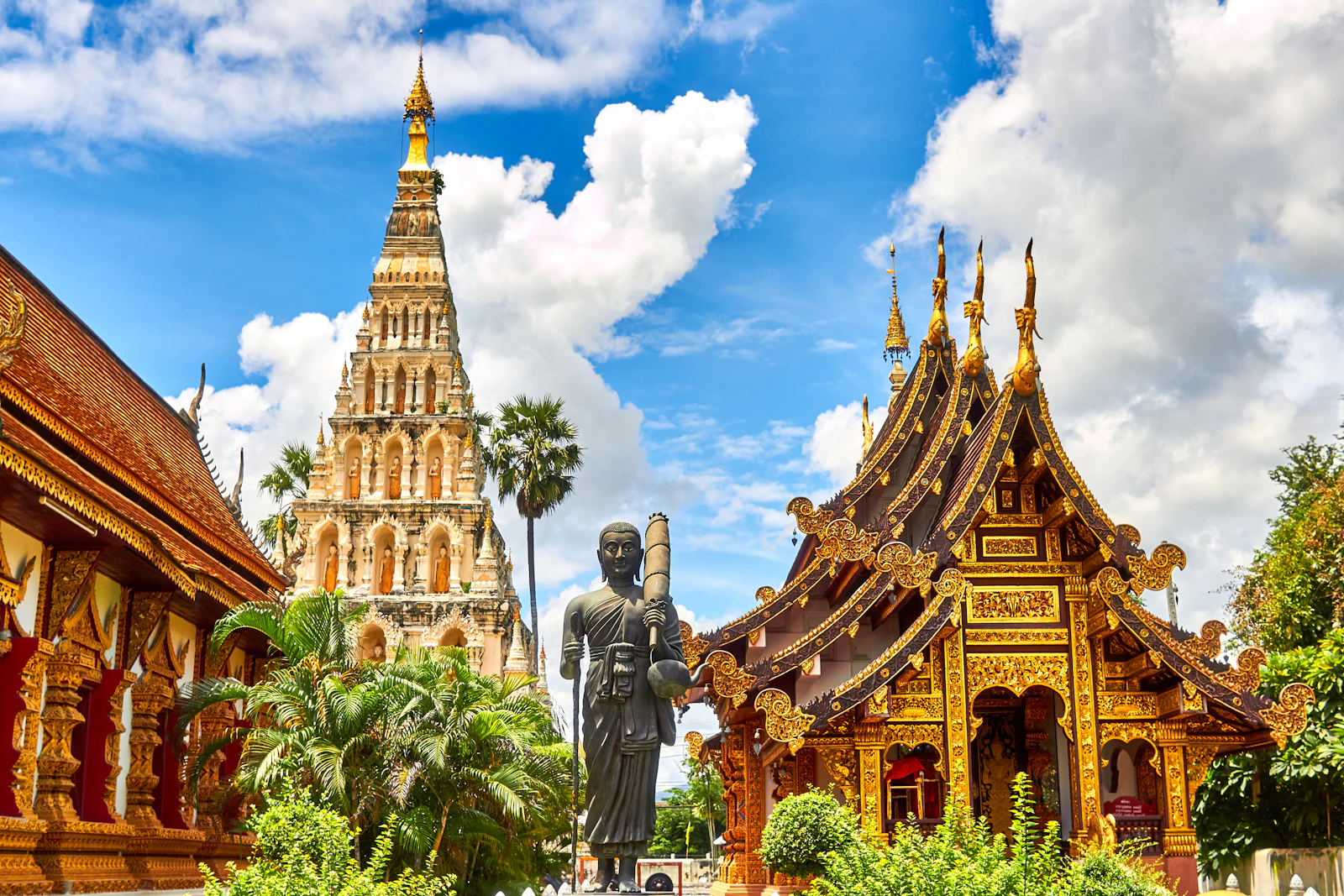 Destination Guides
Seven days in Thailand on a realistic budget
Bangkok, Pattaya and Phuket in a week, costed honestly in taka — where the money actually goes, which tours are worth it and how to avoid the classic tourist traps.
Read article